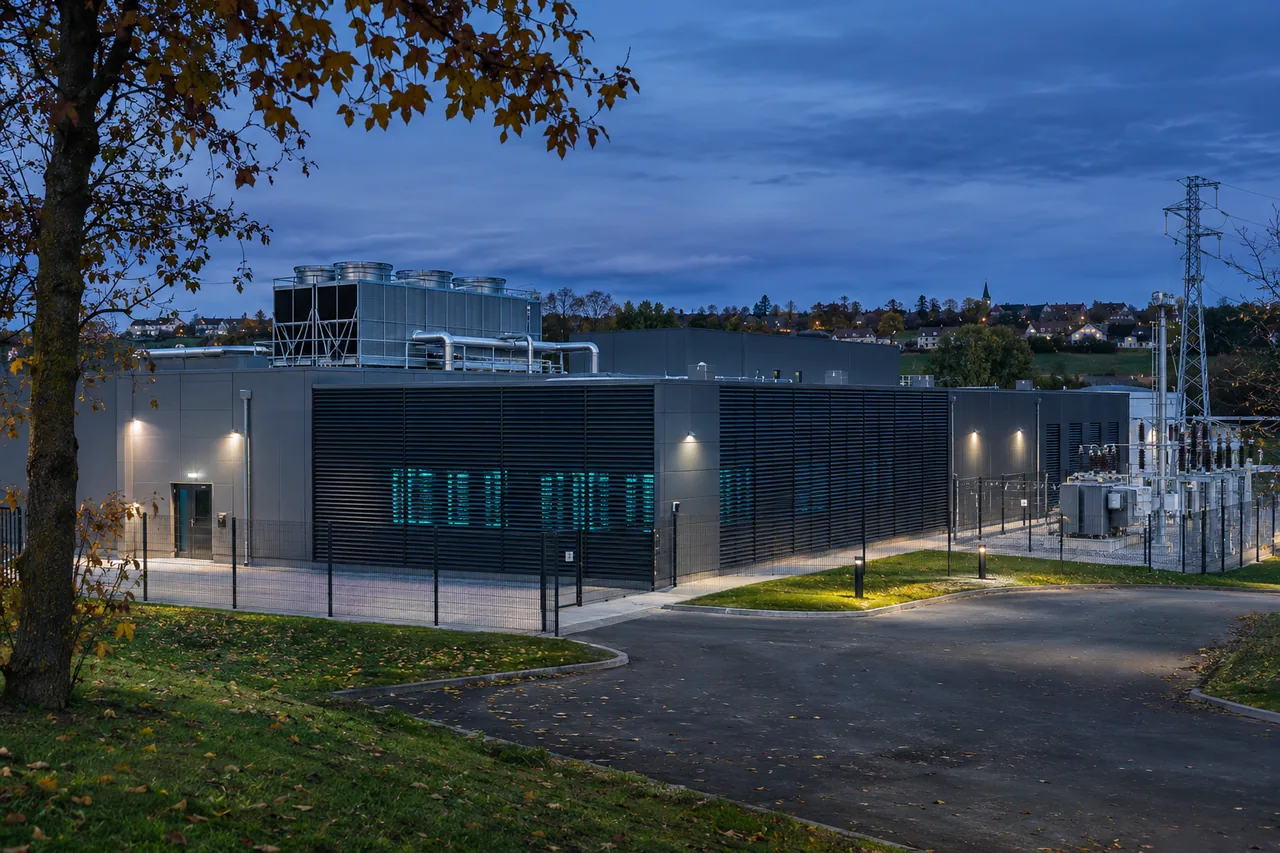
Data centres and AI: why anger is growing in Europe
You ask an AI to summarise a document. A few seconds later, the answer appears. In between, machines have been working, using electricity and producing heat. This long-hidden reality is now entering public debate: on 6 and 7 November, a Europe-wide mobilisation challenged the expansion of data centres. Behind the anger lies a very practical question: how can artificial intelligence develop without placing the burden of its resource needs on the communities that host it?
What you need to understand
A data centre brings together the servers that power our digital services. AI is accelerating demand, but these buildings also host websites, email services and business applications.
The controversy concerns the pace of development, where facilities are built and how costs are shared. Opponents are calling for a pause; public authorities are also seeking to strengthen Europe’s digital capacity.
A weekend of action that broadens the debate
The days of action on 6 and 7 November 2026 were coordinated under the Stop Dirty Data Centres banner. According to the organisers and press reports, more than a hundred organisations in around fifteen European countries joined the campaign, including residents’ groups and advocates for the environment and digital rights.
The programme included rallies, public meetings and site visits, notably in Ireland, Poland, Denmark and France. The shared demand was a moratorium on new large facilities while their effects are examined and a clearer framework is defined. These figures describe the coalition’s announced reach, rather than an independent assessment of participation. Read The Register’s report on the preparations.
It would be simplistic to portray everyone taking part as opposed to technology. Their concerns also cover land availability, noise, access to water and how projects are decided. Their call for a moratorium remains an advocacy position expressed by the coalition ; it is not an adopted European ban.
Why AI needs ever more computing power
Artificial intelligence draws on servers at two stages. First, to train models by adjusting their parameters using data. Then, to answer users: writing text, analysing a file or producing a video. This second activity is repeated with every use, sometimes across millions of requests.
Hardware is improving, but efficiency gains coexist with rising use and more complex tasks. A short summary and a lengthy generated video do not require the same resources. It is therefore impossible to assign a universal energy cost to “asking AI a question”.
Two figures, with their scope explained
The International Energy Agency (IEA) estimates global electricity consumption by all data centres at 485 TWh in 2025. Its central projection reaches around 950 TWh in 2030, or close to 3% of global electricity demand. One terawatt-hour is one billion kilowatt-hours.
These figures cover all data centres, rather than AI alone or Europe alone. And the 2030 figure remains a projection, dependent on use, investment and grid connection capacity. Source: IEA, analysis updated on 16 April 2026.
Electricity: an issue that is primarily local
A relatively small global share can conceal heavy concentration in particular places. A country may generate enough electricity yet lack the capacity to deliver it to the precise location where a major project is planned. Building a substation or reinforcing a power line takes time.
For consumers, the risk depends on funding: if the necessary investment is shared across all users, it can affect their bills. Conversely, a facility that uses available capacity and contributes fairly to costs can help spread them. An automatic rise in electricity prices is therefore not a justified conclusion. The IEA emphasises these tariff choices in its report of 14 October 2026.
The questions for each project become very practical: how much power is actually needed, by what date, and with what financial commitments if the project is scaled back or abandoned? A grid connection request should not be confused with electricity already being consumed.
Water: very different circumstances behind cooling systems
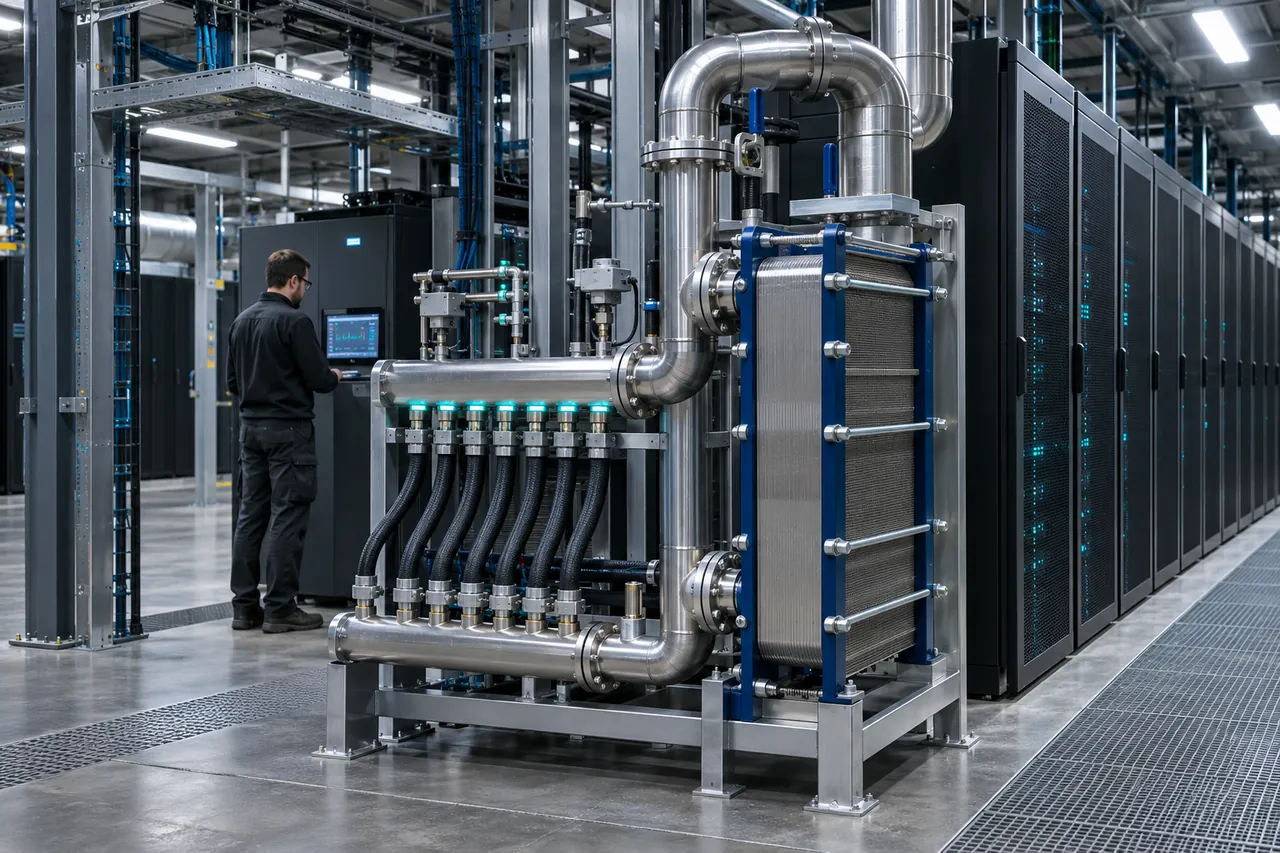
Like your laptop, a server generates heat. But in a server room, thousands of components operate together. That heat must be transferred outside to keep temperatures within operating limits.
Some systems use water evaporation; others favour air or liquid cooling circuits. Consumption varies with the climate, season and equipment. It is also necessary to distinguish water withdrawals, some of which may be returned, from water consumption, particularly through evaporation. An annual figure alone cannot describe the pressure during a drought.
The IEA observes that nearly 40% of the AI-dedicated data centre capacity identified in its analysis is located in areas with high or very high water stress. This global finding does not measure the share of European facilities affected. The agency also highlights potential trade-offs between saving water and saving energy, as well as the water used upstream to generate electricity. Source: IEA, October 2026.
What Brussels has started, and what remains to be decided
Europe is pursuing two objectives that are difficult to reconcile: increasing computing power and managing its impacts. The AI Continent plan sets out an ambition to substantially expand European capacity, with an emphasis on sustainable infrastructure. The aim is to give researchers, businesses and public services the resources to develop their tools.
The regulatory position as at 9 November 2026
- An existing framework: the Energy Efficiency Directive and the 2024 delegated regulation organise the reporting of energy and environmental data for the facilities concerned.
- A further step on 21 September 2026: the Commission adopted a data centre efficiency package, including a common rating system and an electronic label based on reported data. Adoption by the Commission does not mean that every facility already has an operational label.
- Minimum requirements still being prepared: a consultation is open until 14 December 2026. The legislative proposal is scheduled for the second quarter of 2027. These future standards are not already European thresholds applicable to all data centres.
Sources: package adopted by the Commission ; reporting framework ; consultation on minimum standards.
Investment, jobs and sovereignty: examining the benefits closely
This infrastructure has real uses: hosting applications, supporting research and giving businesses access to computing power. For an SME, reliable services can facilitate collaboration, data analysis or the development of new products.
But an announced investment does not tell us how many lasting jobs will be created locally. Construction, operation, maintenance and the digital activities enabled around the facility must be distinguished. Before comparing promises, we should ask for jobs to be broken down by occupation, duration and location, rather than a total that mixes everything together.
The same caution applies to sovereignty: a building in Europe does not, on its own, guarantee control over the service. Who operates the machines? Who controls the software and access rights? Can the customer switch provider? These questions complement the issue of location, as we explained in our article on European digital sovereignty.
Moving all computing abroad would not make its footprint disappear. In its baseline scenario, ADEME, the French Agency for Ecological Transition, envisages electricity use associated with French digital activities increasing by a factor of 3.7 by 2035, with two thirds of that consumption abroad. This is a forward-looking scenario, not a certain forecast or a measurement limited to facilities located in France. Source: ADEME, 6 January 2026.
Solutions exist, provided their results are measured
The choice of cooling technology matters. ADEME examines, among other approaches, the use of outside air when conditions allow, liquid cooling directly at component level and immersion in a suitable fluid. Each technology must be assessed alongside its electricity and water needs. See the study on cooling technologies.
Recovered heat can also supply buildings or a district heating network. But this requires a user close enough, suitable equipment and demand for heat at the right time. ADEME therefore distinguishes theoretical heat potential from the amount that can actually be put to use: a promise of heat recovery is not the same as a measured delivery.
On the grid side, some deferrable computing tasks can be scheduled outside periods of strain, if the service allows it. Electricity contracts and equipment must also be examined in context: a claim of renewable electricity supply does not, on its own, establish the physical availability of electricity at every hour.
A useful indicator, but not an overall score
The PUE compares a facility’s total energy use with that of its IT equipment. For example, a PUE of 1.2 means 1.2 units of total energy for every unit used by IT. It provides information about auxiliary energy use, but does not measure the usefulness of the computing, its total volume or the service’s complete footprint. A more efficient facility can consume more if it grows substantially.
Which uses of AI are worthwhile for you?
You do not need to become an energy specialist to make considered choices. Before automating a task, identify the expected benefit. Generating video or repeatedly analysing thousands of files calls for a different assessment from occasional help with writing.
For a business, this also means asking the supplier for specific information: the country where processing takes place, documented consumption, water management and options for exporting data. A tool proportionate to the need, methodically managed files and useful automation already form a sounder approach than accumulating barely used services.
Ultimately, November’s mobilisation raises a question of collective choice: which services do we want to develop, where, and on what terms? Useful computing capacity, visible impacts and verifiable commitments would allow a more constructive debate. Europe’s digital future will depend as much on these decisions as on the power of its servers.
Further reading
Read our articles on technology and the ecological transition and digital sovereignty.
Information current as at 9 November 2026. Sources are linked to the relevant passages; projections, advocacy positions and measures under preparation are identified as such. Original AI-generated visuals: they do not document an actual demonstration or an identified facility.